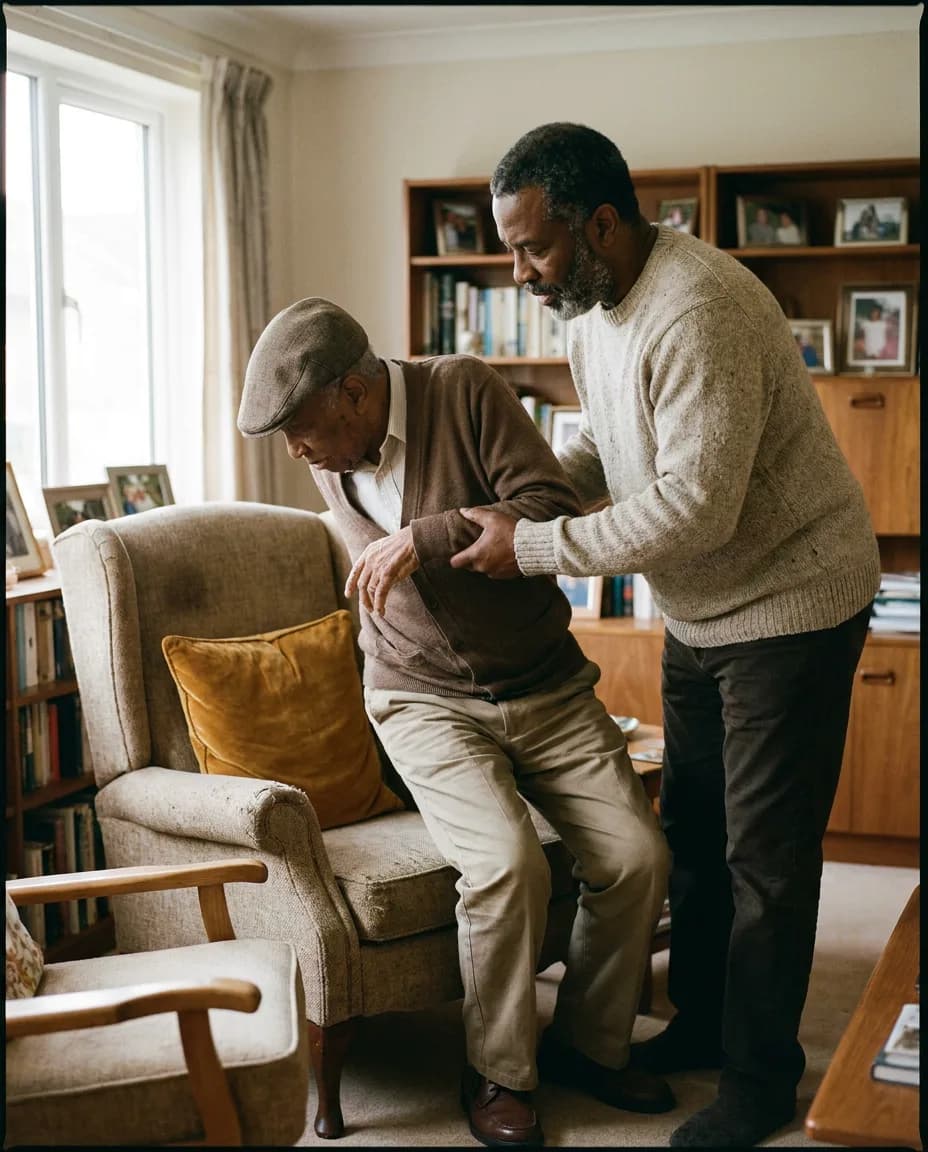
Caring for elderly parents: where most families start
Caring for elderly parents rarely starts with a decision. It starts with small things — driving Dad to appointments, sorting Mom's pills, calling every evening. Then one day you notice you're doing a lot, and it's growing. That is the moment to step back and make a plan.
Parent care works best when it's planned rather than improvised. Families who plan tend to keep a parent at home longer, share the load more fairly and avoid rushed decisions after a fall or a hospital stay. This guide walks through the full picture of taking care of elderly parents at home: what help looks like, who does what, and how to pay for it — including how a family caregiver can be paid.
If you are here because you typed "I need help with my elderly mother" late at night, you're not alone, and you don't need to have it all figured out. Start with the signs below, then look at the options.
Signs your parent needs more help with elderly care at home
Parents often hide how much they're struggling. These are the signs families most often notice first:
- Unopened mail and missed bills, or unusual charges on accounts.
- Weight loss or an empty fridge — cooking has become hard.
- Falls, bruises or near-misses, especially on stairs or in the bathroom.
- Wearing the same clothes or skipping showers.
- Missed medication doses or doubled doses.
- A home that's slipping — clutter, dirty dishes, an unmowed lawn.
- Getting lost while driving or confusion about the day.
- Withdrawal from friends, church or activities they used to love.
One sign alone isn't a crisis. Several at once means your parent needs help with elderly care tasks they used to manage. Talk to their doctor, and consider asking for a home care assessment through your parent's Area Agency on Aging — call the Eldercare Locator at 1-800-677-1116 to find it.
Home care options for elderly parents
There is a wide range of options for elderly care at home. Most families use more than one:
| Option | What it is | Read more |
|---|---|---|
| Family help | Children, grandchildren and neighbors share tasks | This guide |
| Part-time home care | An aide for a few hours a day or week | Part-time and short-term care |
| Adult day programs | Daytime care outside the home, with meals and activities | Respite care |
| Home health | Nursing or therapy after an illness, often covered by Medicare | Home health vs. home care |
| 24-hour or live-in care | Someone in the home around the clock | Live-in caregiver, 24-hour care |
| A paid family caregiver | A relative hired and paid through Medicaid | Get paid to care for family |
In home care options for elderly parents are mostly non-medical: help bathing, dressing, cooking, getting around and staying safe. That's what most parents need, and it's what most Medicaid home care programs pay for. Read non-medical home care and senior home care for more on in home care options and what each one includes.
Home care options for elderly relatives also include help that isn't a person at all — a medical alert button, grab bars, meal delivery and grocery delivery. These small changes often buy a lot of time.
Keep mom at home: care for mom at home that lasts
"We just want to keep Mom at home" is the most common thing families say. It's usually possible with the right mix of help. Care for mom at home works best when it's built around her routine rather than around what's convenient for everyone else.
- Write down a normal day — when she wakes, eats, bathes, takes medicine, naps and goes to bed. Mark where she needs help.
- Make the house safer — grab bars, a shower chair, better lighting, no loose rugs.
- Fill the gaps — family for some hours, home care for mom at home for others.
- Plan for bad days — who covers when you're sick or away? That's what respite is for.
Mom at home care often starts with just a few hours of help for mom at home each week — a shower twice a week and company at lunch. As needs grow, taking care of mom at home may mean a daily visit or a live-in caregiver. Home care for my mom doesn't have to be all or nothing.
The same applies to fathers. Families looking for a caregiver for my dad find the same options and the same programs.
Taking care of family members at home: who does what
Taking care of family members at home goes better when the work is split on purpose. In most families one person ends up doing most of it — usually whoever lives closest. That's a recipe for burnout. A better split:
| Role | What they do | Who suits it |
|---|---|---|
| Coordinator | Keeps the calendar, talks to doctors, runs family meetings | The sibling who lives closest or is most organized |
| Hands-on caregiver | Personal care, meals, daily check-ins | Whoever lives with or near the parent — and may be paid |
| Money and paperwork | Bills, insurance, Medicaid applications | The sibling comfortable with forms |
| Relief shifts | Weekends, evenings, holiday cover | Siblings who live farther away |
| Remote support | Phone calls, online orders, research | Anyone, from anywhere |
Hold a family meeting with your parent included if they're able. Being a caregiver for a family member is easier to sustain when everyone knows their job. Being a caretaker for a family member alone, without a plan, is how people burn out.
Don't forget the other generation: seniors taking care of seniors is common. A 70-year-old daughter caring for a 94-year-old mother — or a husband caring for his wife — needs as much support as anyone. In many states a spouse can be paid; see the spouse rules by state.
Find out in 2 minutes
Answer 5 easy questions. See your programs and pay before you share any contact info.
Being a caregiver for a parent: what it really involves
Being a caregiver for a parent is a job, even when it's unpaid. It can mean bathing, toileting, cooking, managing medicines, driving and sitting up at night. Being a caregiver also means handling feelings: role reversal, grief for the parent you used to know, and guilt about never doing enough.
Some things that help:
- Accept help early. Most caregivers wait too long.
- Get training. Safe transfers and bathing techniques protect both of you. Your Area Agency on Aging can point to free classes.
- Protect your own health. See your doctor, keep sleep sacred when you can, and take breaks.
- Join a support group. Talking to other caregivers is one of the most useful things you can do. See family caregiver support programs.
Being a caretaker for a family member doesn't make you any less their son or daughter. The goal of taking care of a loved one is that they're safe and still themselves — and that you are, too.
Taking care of a loved one at home without burning out
To take care of your loved ones well, you also have to take care of yourself. Families that care for parents at home for years, not months, tend to do three things: they ask for help to care early, they take regular breaks, and they don't let one family member taking care of elderly parents carry the whole load.
- Book breaks before you need them. Respite care — an aide at home, an adult day program or a short stay — lets you rest while your parent stays safe.
- Ask for specific help. "Can you take Dad to his Tuesday appointment?" works better than "Let me know if you need anything."
- Use outside help to care for loved one at home needs you can't cover — nights, bathing, heavy lifting.
- Talk to other caregivers. A support group is often the first place people hear about programs that help.
Families with loved ones in home care — whether an agency aide or a paid relative — still do a lot of coordinating. Good home care for loved ones should lighten your load, not add a second job. If it doesn't, ask the agency or program for changes. Our guide on how to choose a home care agency covers what good looks like.
Being a caretaker for parents who both need help — say, a father with dementia and a mother with limited mobility — multiplies the work. Ask for an assessment for each parent, since each one qualifies on their own needs. Getting help taking care of elderly parents is not giving up. It is how families manage to take care of elderly at home for as long as possible, and how you care for your loved ones for the long haul.
Families who care for aging parents from a distance can still play a big part: managing money, researching programs, and covering relief shifts during visits.
Getting paid as a caregiver for your parent
Many families don't know this: if your parent qualifies for Medicaid home care, every state has at least one program that can pay a family member to be the caregiver. Adult children can be paid caregivers in virtually every state. So being the caregiver for elderly parent needs doesn't have to mean giving up your income.
The route depends on the state. In New York it's CDPAP; in California, IHSS; in Wisconsin, IRIS; in Georgia, Indiana and Ohio, Structured Family Caregiving pays a stipend to a caregiver who lives with the parent. The steps are the same everywhere: your parent qualifies for Medicaid, an assessment sets their hours, your parent chooses you, and a payroll agency pays you.
Paid caregiver for family member: pay by state
Reported pay runs from about $11 to $29 an hour in states that pay hourly, and some states pay a daily or monthly stipend instead. See family caregiver pay rates and your state's page — for example caregiver pay in Pennsylvania, Florida or Texas.
Whether you're a caregiver for my mom, a caregiver for mom and dad both, or a caregiver for elderly family member needs like a grandparent or aunt, the program is the same. For the paperwork and requirements, read how to become a paid caregiver for a family member.
Paying for home care for parents
Home care for parents is paid for in four main ways:
| Source | What it covers | Can it pay family? |
|---|---|---|
| Medicaid | Ongoing personal care at home for people who qualify | Yes, in every state through at least one program |
| Medicare | Short-term skilled home health after illness or injury | No. Does Medicare pay family caregivers? |
| VA | Home care and caregiver programs for eligible veterans | Yes, in some programs |
| Private pay and insurance | Whatever you buy | Sometimes, depending on the policy |
Home care for elderly parent needs can get expensive quickly if you pay privately. Read the cost of in-home care and private pay home care. If your parent has limited income and savings, look at Medicaid home care first — the long-term care income limits are higher than many people expect.
Help for elderly parents living at home: services worth knowing
Beyond hands-on care, there's a lot of help for elderly living at home that families don't know about. Your Area Agency on Aging can connect you to most of it:
- Home-delivered meals and congregate meal programs.
- Transportation to medical appointments.
- Home repairs and modifications for safety.
- Caregiver support — counseling, training, support groups and respite through the National Family Caregiver Support Program.
- Benefits counseling to check eligibility for Medicaid, Medicare Savings Programs and SNAP.
This kind of elder care assistance is how help for elderly people reaches them at home. In home help with elderly parents isn't only about aides — it's the full set of services that keep a household running.
When home care stops being enough
Home care can go a long way, but there are times it isn't safe or sustainable. Signs it may be time to consider another setting:
- Your parent needs two people for transfers, around the clock, and that can't be covered.
- Wandering or behavior from advanced dementia puts them at risk even with supervision.
- Medical needs require nursing on site all day.
- The family caregiver's own health is breaking down.
Moving isn't failure. Read assisted living vs. home care to compare. Many families find that more paid hours, 24-hour home care or regular respite care keep a parent home longer than they expected.
Common questions from families caring for a loved one
- "I need help taking care of my elderly mother — where do I start?" Call your mother's Area Agency on Aging through the Eldercare Locator, and check whether Medicaid could pay you.
- "I need help with elderly parent care, but I live in another state." Most programs pay for care wherever your parent lives. Use the state page for their state, such as Ohio or North Carolina.
- "Can a family caretaker be paid if they live with the parent?" Yes — and living together can unlock daily-stipend programs and a tax rule that can make the pay tax-free.
- "What home care help for elderly parents is free?" Area Agency on Aging services are free or low-cost, and Medicaid home care costs nothing for those who qualify.
- "Is caring for seniors who aren't family different?" If you want to work as a caregiver for others, see caregiver jobs.
Whether you are a caregiver for loved one needs that are new or long-standing, and whether you describe it as help for elderly parents or simply taking care of elderly relatives, the first step is the same: find out what your parent qualifies for.
Where to go next
Frequently asked questions
How do I know when my parent needs help at home?
Watch for missed bills, weight loss, falls, skipped showers, medication mistakes, a home that's slipping and confusion. Several of these at once usually means your parent needs regular help.
What are the options for caring for elderly parents at home?
Family help, part-time home care aides, adult day programs, home health after illness, live-in or 24-hour care, and a family member paid through Medicaid. Most families combine several.
Can I get paid to take care of my mom or dad?
Usually yes, if your parent qualifies for Medicaid home care. Every state has at least one program that lets a parent hire an adult child as their paid caregiver.
Does Medicare pay for caring for elderly parents at home?
Medicare covers short-term skilled home health care after an illness or injury, not ongoing personal care, and it does not pay family caregivers. Medicaid does.
How do siblings share caring for a parent?
Give each person a defined role: a coordinator, a hands-on caregiver, someone for money and paperwork, and others for relief shifts or remote tasks. Hold regular family meetings.
When is home care no longer enough?
When your parent needs round-the-clock help that can't be covered, when dementia makes home unsafe, when on-site nursing is needed, or when the caregiver's health is failing.
Where can I get support as a family caregiver?
Your Area Agency on Aging runs the Family Caregiver Support Program, which offers counseling, training, support groups and respite. Many disease organizations also run helplines and groups.
Sources: Eldercare Locator (Administration for Community Living) · Medicaid.gov: self-directed services · ACL: National Family Caregiver Support Program. Program rules and rates change — always confirm with the program. Reviewed September 30, 2026.