What is the Consumer Directed Personal Assistance Program?
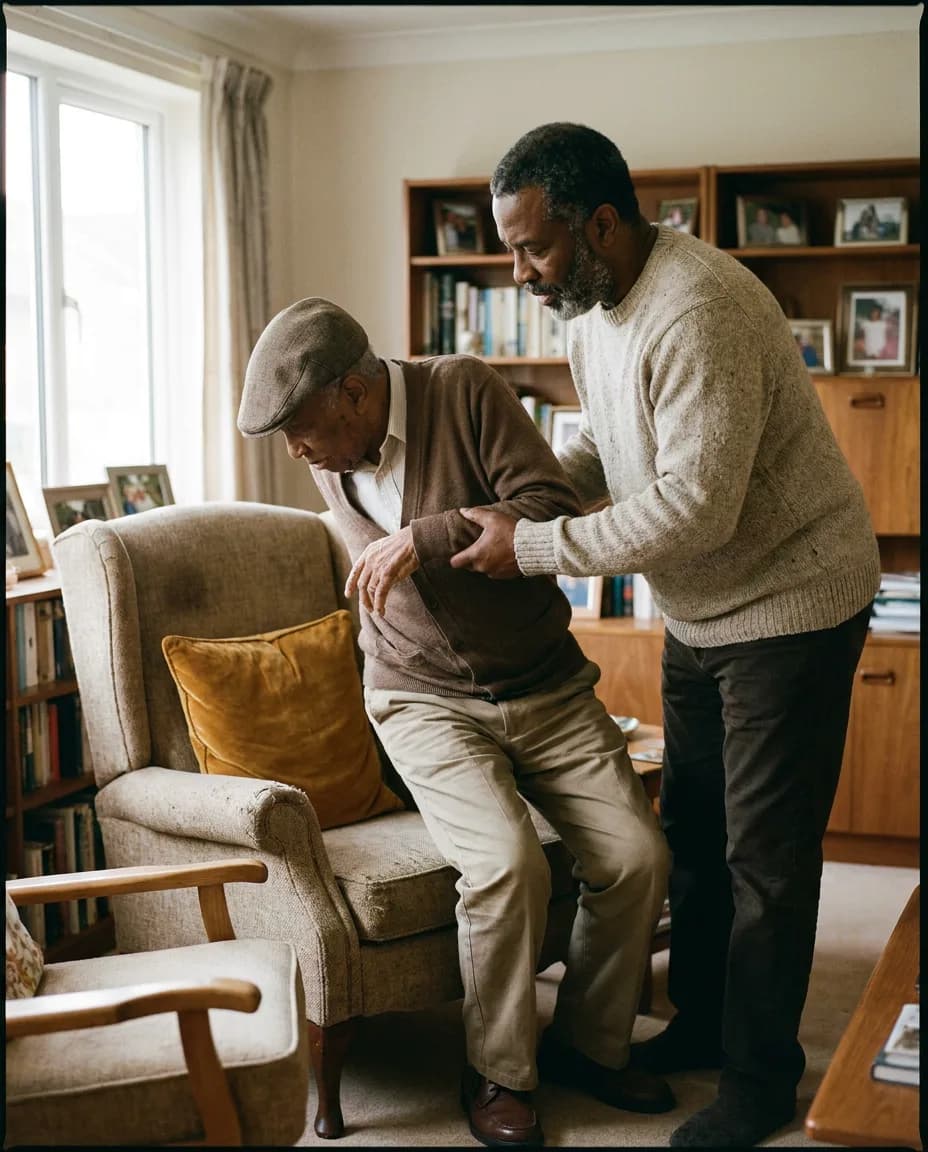
The Consumer Directed Personal Assistance Program is a New York Medicaid benefit for people who need help at home with daily tasks — bathing, dressing, meals, medications, getting around. What makes it different is who's in charge. In the CDPAP program, the person receiving care (the "consumer") recruits, hires, trains and supervises their own personal assistant, instead of an agency sending a stranger.
That's why families use it: consumer directed personal assistance means your mother can hire you. Personal assistants in CDPAP can also do some tasks that normally need a nurse, such as giving injections or managing a feeding tube, because the consumer directs and trains them.
Medicaid CDPAP is part of New York's Medicaid state plan, which means it's an entitlement: if your relative qualifies, the state can't put them on a waitlist. It's the model for consumer-directed care programs across the country.
CDPAP eligibility: who can get care
CDPAP eligibility has three parts. The person receiving care must:
- Have New York Medicaid that covers community-based long-term care. Long-term care Medicaid has its own income and asset rules.
- Need help at home as confirmed by a needs assessment. Since September 1, 2025, most new applicants must also meet New York's "minimum needs" rule: needing at least limited hands-on help with more than two activities of daily living, or supervision with more than one for people with dementia or Alzheimer's.
- Be able to direct their own care, or have someone who can. A consumer who can't manage the caregiver can name a designated representative — a relative or friend who handles those duties.
Most adults on Medicaid who need long-term home care get it through a managed long-term care (MLTC) plan, so the plan's care manager is usually the person to ask. For the wider picture of care options in the state, see home care in New York and the New York caregiver program page.
CDPAP caregiver requirements
The CDPAP caregiver requirements are light compared with agency work. There's no home health aide certificate needed. A personal assistant must:
- Be 18 or older and legally able to work in the US.
- Complete the hiring paperwork with PPL — tax forms, I-9 and direct deposit — and any required health screening.
- Not be the consumer's spouse.
- Not be the parent of a consumer under 21. Parents can be paid for adult children 21 and over.
- Not also be the consumer's designated representative. One person can't be both the employer's stand-in and the employee.
Adult children, grandchildren, siblings, nieces, nephews, in-laws and friends can all be hired, and a consumer can have more than one personal assistant sharing the approved hours. More on this in how to become a paid caregiver for a family member.
The 2025 move to PPL, the single statewide fiscal intermediary
Until 2025, more than 600 fiscal intermediaries — the CDPAP agencies families saw advertised everywhere — handled payroll for personal assistants. New York's 2024 budget replaced them with one Statewide Fiscal Intermediary. Public Partnerships LLC (PPL) was selected, and since April 1, 2025 it has been the only entity authorized to provide fiscal intermediary services for CDPAP.
In practice, that means every consumer and every personal assistant registers with PPL, which runs background checks, withholds taxes, pays wages and handles electronic visit verification. Lawsuits from former fiscal intermediaries and advocacy groups tried to stop the change; the transition stayed in effect, although parts of it were delayed along the way.
The practical effect for families: you no longer choose a CDPAP home care agency to run payroll. PPL does it for everyone. Some organizations still help families enroll or act as facilitators — read our independent comparisons of PPL and FreedomCare before signing anything, and check the New York Department of Health's CDPAP page for the current rules.
Find out in 2 minutes
Answer 5 easy questions. See your programs and pay before you share any contact info.
CDPAP pay in 2026 and the "highest paying" question
New York publishes PPL's minimum base wages for personal assistants. From January 1, 2026:
| Region | Base wage | Example county pages |
|---|---|---|
| New York City | $20.65/hr | Brooklyn, Queens, Bronx, Manhattan, Staten Island |
| Nassau, Suffolk, Westchester | $20.05/hr | Nassau, Suffolk, Westchester |
| Rest of state | $18.65/hr | Erie (Buffalo), Monroe (Rochester) |
Paid leave and benefits come on top. Your weekly total depends on the hours in the care plan: 40 approved hours at $20.65 is $826 before taxes.
People still search for the highest paying CDPAP agencies. With a single fiscal intermediary, there's no longer an agency-by-agency pay difference to shop for: the rate is set by region. Anyone promising a higher CDPAP rate for switching agencies deserves a careful question about how. See all states in family caregiver pay rates and New York caregiver pay.
How to apply for the Medicaid CDPAP program
Applying to the Medicaid CDPAP program follows a set order:
- Get Medicaid through the local Department of Social Services (or HRA in New York City) if your relative isn't enrolled.
- Request a needs assessment. New York's independent assessor evaluates how much help is needed.
- Choose CDPAP with the MLTC plan or local district and get hours authorized.
- Register with PPL — both the consumer (or designated representative) and the personal assistant.
- Start work and log hours through PPL's system.
Families applying to the Medicaid Consumer Directed Personal Assistance Program for the first time often find step 2 takes longest. Describe a typical hard day in the assessment, not a good one. Check eligibility if you're not sure your relative qualifies.
Home attendant vs. CDPAP
A home attendant is New York's everyday term — especially in New York City — for a Medicaid personal care aide sent by an agency. The home attendant program grew out of the city's Medicaid home care services, and the aide is hired, trained and scheduled by a licensed home attendant agency, not by the family.
| Home attendant (agency) | CDPAP | |
|---|---|---|
| Who picks the worker | The agency | The consumer |
| Can it be family? | Only if the agency hires them | Yes, most relatives except a spouse |
| Training | Aide certification required | Consumer trains the assistant |
| Skilled tasks | Limited | Allowed when the consumer directs them |
| Payroll | The agency | PPL |
A family home attendant is possible — some agencies hire a relative who gets certified — but CDPAP is usually the simpler way to be paid for caring for your own family. If you're searching for a home attendant agency near me or a home attendant near me, start with your county page, such as Brooklyn or the Bronx, and compare home health aide roles and home care agencies that hire family members.
Spanish-speaking families often search "agencias de home attendant". The same choice applies: an agency attendant, or CDPAP with a relative you trust.
CDPAP in New York City and the rest of the state
The program is the same statewide; only the wage region and the local office differ. In New York City, Medicaid eligibility runs through HRA; elsewhere it's the county Department of Social Services. Families searching for a "NYC caregiver program" or "NYS caregiver program" usually mean CDPAP — or the state's Expanded In-home Services for the Elderly Program (EISEP) for seniors not on Medicaid.
For local details, start at New York and your county, or read home care in New York for agency, CDPAP and private-pay options side by side.
CDPAP in other states: what it's called outside New York
People search "CDPAP Florida" or "CDPAP Texas" every month because a relative in New York used the word. There is no CDPAP program in Texas, Florida or any state except New York — but every state has a self-directed program that does the same thing. Here's where to look:
| If you searched | The program to look for | State page |
|---|---|---|
| CDPAP Florida / CDPAP program Florida | Participant Directed Option (SMMC-LTC) and CDC+ | Florida caregiver program |
| CDPAP Texas | Consumer Directed Services (CDS) | Texas caregiver program |
| CDPAP California | IHSS (In-Home Supportive Services) | California caregiver program |
| CDPAP NJ | Personal Preference Program (PPP) | New Jersey caregiver program |
| CDPAP CT | Community First Choice and the CT Home Care Program | Connecticut caregiver program |
| CDPAP NC | CAP/DA consumer direction | North Carolina caregiver program |
| CDPAP Virginia | Consumer direction in the CCC Plus Waiver | Virginia caregiver program |
| CDPAP Maryland | Community First Choice and CPAS | Maryland caregiver program |
| CDPAP Georgia | Structured Family Caregiving, CCSP and SOURCE | Georgia caregiver program |
| CDPAP Pennsylvania | Participant-directed services in Community HealthChoices | Pennsylvania caregiver program |
A few differences matter. New Jersey's PPP and Virginia's program can pay a spouse in some cases, which CDPAP can't. Georgia's main family option is a live-in daily stipend — see Structured Family Caregiving. California's IHSS is the closest match to CDPAP; see our IHSS guide. For all 51, see Medicaid family caregiver programs by state.
Common CDPAP mistakes
- Registering with a company that isn't PPL for payroll. Since April 2025, PPL is the only fiscal intermediary.
- Naming the caregiver as the designated representative. The same person can't hold both roles.
- Understating needs in the assessment. The hours you get come from it.
- Assuming a spouse can be hired. Not in New York; another relative can.
- Paying a fee to enroll. CDPAP is free to families.
Where to go next
Frequently asked questions
What does CDPAP stand for?
Consumer Directed Personal Assistance Program. It is New York Medicaid's self-directed home care program.
Can I get paid to care for my mother through CDPAP?
Yes, if she has New York Medicaid, qualifies for home care and chooses you. Adult children are the most common CDPAP personal assistants.
Can a spouse be a CDPAP caregiver?
No. New York does not allow a spouse to be hired as a CDPAP personal assistant.
Do I still need a CDPAP agency?
Not for payroll. Since April 1, 2025, PPL is the single statewide fiscal intermediary for every CDPAP consumer and personal assistant.
How much does CDPAP pay in 2026?
PPL's minimum base wage is $20.65 an hour in New York City, $20.05 in Nassau, Suffolk and Westchester, and $18.65 in the rest of the state, plus paid leave and benefits.
Is there CDPAP in Florida, Texas or New Jersey?
No. CDPAP exists only in New York, but every state has a self-directed equivalent. Florida has the Participant Directed Option, Texas has Consumer Directed Services and New Jersey has the Personal Preference Program.
Do I need a home health aide certificate for CDPAP?
No. The consumer trains the personal assistant, so no aide certification is required.
Sources: NY Department of Health: CDPAP · NY DOH MLTC Policy 25-03: Statewide Fiscal Intermediary transition · NY DOH MLTC Policy 23.04: CDPAS legal guardians and designated representatives · NY DOH: minimum needs requirement · NY DOH: CDPAP rates · NYSOFA: Expanded In-home Services for the Elderly (EISEP) · NYC HRA: Medicaid home care services. Program rules and rates change — always confirm with the program. Reviewed September 30, 2026.