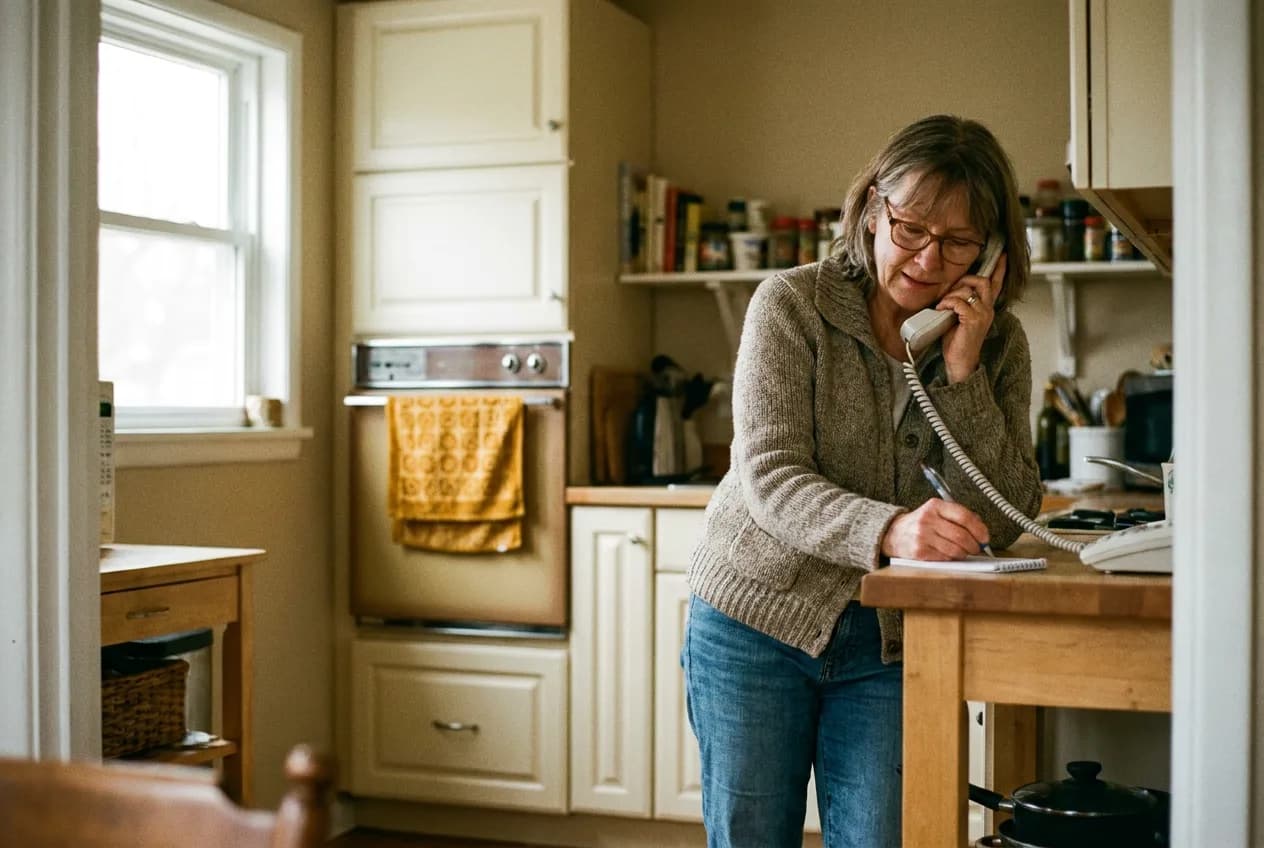
What is part-time home care?
Part-time home care is help at home for less than full-time hours — a few hours a day, or a few days a week. It's the most common kind of home care. A part-time caregiver might come every morning to help with bathing and breakfast, or twice a week for errands and housekeeping.
Part-time elderly care suits someone who is mostly independent but struggles with certain tasks or times of day. Part-time home care for elderly parents is also how many families start, adding hours later. Part-time in-home care for elderly relatives can include a part-time home health aide if some tasks need extra training. See our overview, what is in-home care, and senior home care.
Hourly home care services: how they work
Hourly home care services charge for the hours a caregiver is in the home. Hourly elderly care and hourly senior care are usually booked as a regular schedule — for example, Monday, Wednesday and Friday, 9am to 1pm.
If you're searching for hourly caregivers near me, compare agencies with independent caregivers. An hourly caregiver hired privately may accept shorter visits than an agency, but you take on the employer's role. See private pay home care and our agency checklist.
Daily care for elderly relatives: morning and evening visits
Daily care for elderly people usually clusters at the two hardest times of day: getting up and going to bed. A daily caregiver might come for two hours in the morning to help with bathing, dressing, medications and breakfast, then return in the evening.
Daily home care services like these keep routines steady without paying for the hours in between. Daily home care for elderly parents also means someone checks in every day — often the difference between catching a problem early and finding it late. Care visits at home can be as short as the agency allows or as long as the day needs.
Short-term in-home care after a hospital stay
Short-term in-home care covers a few days to a few weeks. It's common after surgery, a fall, a stroke or any hospital stay, when someone is weaker than before but expected to recover. Short-term home care services can bridge the gap until they're back on their feet — or until a longer plan is set up.
There are two kinds of short-term home care for elderly patients leaving hospital, and they're paid differently:
| Short-term home health (medical) | Short-term in-home care (non-medical) | |
|---|---|---|
| What | Nurse and therapist visits, wound care, rehab | Bathing, meals, housekeeping, supervision |
| Ordered by | A doctor | The family |
| Medicare pays? | Yes, if homebound and needing part-time skilled care | No |
| Typical pattern | Home health visits a few times a week | Hourly visits or daily care |
Short-term in-home nursing care and home health visits are covered by Medicare when the patient is homebound and needs part-time or intermittent skilled care. Medicare doesn't pay for a short-term home health aide when personal care is the only thing needed. Short-term in-home care for elderly patients who need help with bathing and meals is usually paid privately or by Medicaid. Read home health vs. home care and in-home nursing care.
Daily home health care and daily nurse care at home
Daily home health care — a nurse or aide every day — is less common than people expect. Medicare home health is part-time or intermittent, so daily skilled visits are usually short-lived. Daily nurse care at home for longer periods is private duty nursing, which CareScout's 2025 survey put at a national median of $90 an hour, or $160 a visit. See in-home nursing care.
Find out in 2 minutes
Answer 5 easy questions. See your programs and pay before you share any contact info.
Temporary caregivers and respite
A temporary caregiver covers a gap — the usual caregiver's holiday, illness, or a family event. Temporary care is also called respite. Many families use a short-term caregiver a few times a year so the main caregiver can rest.
If you need temporary elderly care near me, agencies are the fastest route because they have staff ready. Some Medicaid waivers and the National Family Caregiver Support Program fund respite; see respite care and family caregiver support programs. Short-term adult care for younger adults works the same way.
Can you hire a caregiver for a day?
Yes. People search to hire a caregiver for a day, hire a carer for a day or hire caregiver for a day coverage for a wedding, a trip or a medical appointment of their own. Agencies can usually book a single shift if you call ahead, subject to their minimum visit length. A one-off booking may cost more per hour than a regular schedule.
For a single day, give the caregiver a written sheet: medications and times, meals, mobility needs, emergency contacts, and any behaviors to expect. That turns a stranger into a safe pair of hands for the day.
Elderly sitters and home sitters for elderly parents
Elderly sitters — sometimes called home sitters for elderly relatives or companions — stay with someone who shouldn't be alone but doesn't need much hands-on care. They're common for people with early memory loss, or while a family caregiver runs errands.
A sitter's role is mostly supervision and company. If personal care is needed, make sure the sitter is trained and allowed to give it. See non-medical home care for the difference between companion care and personal care.
One-on-one home care
All home care is, in a sense, one-on-one: one caregiver with one person. One-on-one home care is its main advantage over a facility, where aides share their time. A one-on-one caregiver can follow the person's pace, habits and preferences.
If you're looking for a one-on-one caregiver near me, or a one-on-one home care agency, ask whether the same caregiver will come each visit. Continuity matters more than any other single thing. Search our county pages — Kings County, Los Angeles County, Cook County, Philadelphia County or King County, Washington — and use the home care near me guide to find a one-on-one caregiver agency near me in your area. A one-on-one caregiver agency that can't promise a consistent caregiver is a warning sign.
On-call home care and on-call caregivers
On-call home care means a caregiver can be called in when needed rather than on a fixed schedule. It's useful for unpredictable needs — a bad day, a sudden fever, an evening when family can't come. Few agencies can guarantee an on-call caregiver at short notice, so ask directly how fast they can send someone and what they charge.
On-call home health care and an on-call home health aide are more common through home health agencies, which have nurses on call for their patients. If you need an on-call caregiver near me, it usually works best as an add-on to a regular schedule with the same agency.
Home visits for elderly and home visits for seniors
Home visits for elderly adults can be medical (a nurse, therapist or house-call doctor) or non-medical (an aide or companion). Home visits for seniors also include programs run by Area Agencies on Aging, such as friendly visitors and meal delivery. A regular visit, even a short one, gives family a reliable check that things are OK.
What part-time home care costs
CareScout's 2025 Cost of Care Survey put the national median for a non-medical in-home caregiver at $35 an hour. Part-time home health care from a nurse costs more — a median of $90 an hour or $160 a visit.
| Schedule | Hours a week | About |
|---|---|---|
| Two 4-hour visits | 8 | $280 |
| 4 hours, 5 days | 20 | $700 |
| Mornings and evenings, 2 hours each, daily | 28 | $980 |
Local rates vary, and one-off or short visits may cost more. See the cost of in-home care.
Who pays for part-time in-home care
Part-time in-home caregiver hours can be paid privately, through long-term care insurance, by the VA, or by Medicaid. Medicaid approves hours through an assessment, and those hours can often go to a family member.
Programs include CDPAP in New York, IHSS in California and consumer-directed care elsewhere. Check eligibility to see which fits, or read about Medicaid home care. Part-time caregivers near me on Medicaid are listed through your state program — see the state list.
Where to go next
Frequently asked questions
Can I get home care for just a few hours a week?
Yes. Part-time care can be one or two visits a week, though most agencies set a minimum visit length.
How much does hourly home care cost?
CareScout's 2025 survey put the national median for a non-medical caregiver at $35 an hour. Short or one-off visits may cost more per hour.
Does Medicare pay for short-term home care after a hospital stay?
Medicare can pay for part-time skilled home health visits if the person is homebound and a doctor orders it. It does not pay for aides when personal care is the only need.
Can I hire a caregiver for just one day?
Usually, yes. Agencies can book a single shift if you call ahead, subject to their minimum visit length.
What is an elderly sitter?
A sitter or companion stays with someone who shouldn't be alone, mainly for supervision and company rather than hands-on care.
Can a family member be paid for part-time care?
Yes. Medicaid in every state can pay a relative for the approved hours, however few they are.
Sources: CareScout 2025 Cost of Care Survey (press release) · Medicare.gov: home health services · ACL: National Family Caregiver Support Program. Program rules and rates change — always confirm with the program. Reviewed September 30, 2026.